Equality HiveEquality HiveEquality HiveEquality Hive
  • Home
  • Ghostwriting
  • BLOG
  • Book
  • About
  • Contact
  • Home
  • Ghostwriting
  • BLOG
  • Book
  • About
  • Contact
May 21, 2019

Writing a Social Impact Book? Here’s What You Need to Know.

Read time – 5 mins.

Social entrepreneurship and social impact leadership are two of the biggest growing trends. As our world faces a whole host of collective challenges, there are an army of new leaders stepping up to the plate to suggest solutions and make a difference in the world.

If you are making an impact with the work that you do, and you want to reach a wider audience with your message, writing a book would appear to be one of the most logical moves.

As more and more social impact leaders are writing books about their valuable work, in this post we share some of the best practices— as well as the common pitfalls—so that you can write a book that actually contributes to change. 

New Program for Authors Starts July 16th 2019
Click here to learn more and register

Audience

One of the first considerations for writing a social impact book is your audience. Having ghostwritten over 30 non-fiction books (as well as four best-selling ones of my own, which have been published in 15 languages), and having consulted with countless clients on their book ideas, there is one issue that comes up time and time again. Many potential authors will attempt to write a book with no connection to their audience.

Before you even start writing, you need to answer these 3 questions as a non-fiction author:

  • Who are your audience?
  • What are their needs?
  • How will reading your book meet those needs?

What we are really asking here is why should someone read your book? What’s in it for them, and what is your unique perspective or message that will create an impact in their life?

If you are a social entrepreneur or social impact leader, we can assume that your audience also have a desire to make a difference in the world with the work that they do. But it’s not enough to say, “This book is for everyone who wants to make a positive change.” Just like an advertiser will spend countless hours in the boardroom figuring out who their product is for and why the consumer needs it before they start creating it, you need to do the same for the readership of your book.

So who exactly are your audience, what is that specific difference that they want to make in the world, and how does your book help them make that difference? If you don’t write your book—or shape your message—with your audience’s needs in mind, then there will be a disconnect between what you are writing and what they actually get from your work.

What You Say

When you get clear on the issues you are addressing and why they are important to your audience, your next phase is figuring out the angle you are taking with your message. This involves getting clarity around your unique point of view on the challenges you are addressing. Usually you will either have (a) a new thing to say or (b) a unique way of saying something that has already been said. Getting clear on the way in which your message is different is also an essential starting point. 

It’s equally vital as you begin to formulate your core message that you don’t make it too broad. While messages such as “I want to make the world a better place,” or “I want to banish world hunger” might be honorable in their intentions, you need to be much more specific in addressing a particular element of an issue, rather than focusing on the issue as a whole.


It can also be useful to move away from messaging that creates the sense of good versus evil. We have been so indoctrinated into a Hollywood plot structure of defeating an evil force that this often comes through in our social impact writing. However, messages that focus on specific solutions without spending too much time dwelling on the idea that there is a corrupt or evil force that needs to be defeated, are usually much more impactful for an audience.

How You Say It

It’s not just the content of your message that counts. It’s also the tone you use to convey it. With social impact books there can be a tendency to make the material too “fluffy” in tone, so that it tiptoes around the issues at hand and doesn’t face them head on. Some of the more successful social impact books that I’ve either read or worked on have had the courage to own their message and deliver it with clarity and strength. So if you think something doesn’t work or something needs to change, a blunt call-out is often more effective than dancing around the edges of an issue.

New Program for Authors Starts July 16th 2019
Click here to learn more and register

3 Common Pitfalls

We’ve talked about what works, but the following are some of the recurring challenges that I’ve witnessed in books of this nature.

1 – Vanity

The first pitfall is writing a vanity book. This is a book where the author congratulates themselves for all the great things they have done in the world. When you write an effective social impact book—or any non-fiction book for that matter—if you just do so to congratulate yourself on all the phenomenal work you have done, without giving the audience an idea about how to do something similar, it’s going to fall short of making a difference.

2 – Fantasy

You may have some revolutionary ideas about how to create change in the world, but unless you have tested them out in reality, they are interesting concepts or visions, rather than solid ideas grounded in truth. Even if you are writing a book that has a visionary message about a future world you are imagining, if it doesn’t relate to some of the challenges that we are facing today and give suggestions on how to solve them, it will fall short of inspiring your audience to address issues down on the ground.

3 – Information Dump  

In fiction writing there is a noticeable difference between ‘show’ and ‘tell’. When you show your reader, you take them on an unfolding journey. In fiction this means setting the scene, and a fiction writer will go to great lengths to allow the dialogue between characters to unfold in order to create mood or atmosphere. If they just describe or tell us what happened between two characters, we miss the opportunity to go on a journey with them. The same is true in non-fiction. One of the biggest mistakes that a novice non-fiction author makes is that they tell rather than show. A book of this nature is dry and lacks dynamism. It contains all the ideas of the author without any of the texture.


A good non-fiction book shows the reader the authors ideas through many different layers. We hear stories of triumphs and challenges, see case studies so that we can experience the book, and are given practical exercises that we can engage in. We feel, hear, and see what the author is showing us, so that we are guided through the whole depth of our human existence to take action.

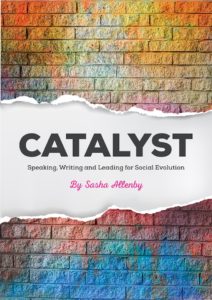
For the past decade, Sasha Allenby has been a ghostwriter for some of the greatest thought-leaders of our time. Her journey started when she co-authored a bestselling book that was published in 12 languages worldwide by industry giants, Hay House. Since then, Sasha has written over 30 books for global change agents. Following the events of the last couple of years, she turned her skill set to crafting social messages. Her latest book Catalyst: Speaking, writing and leading for social evolution supports thought-leaders to craft dynamic messages that contribute to change. 
You are a catalyst or visionary who is crafting an evolutionary message. You want to be part of a community that supports you to make a difference with your spoken and written word. Sign up to receive weekly blogs and updates that enable you to craft your unique message.


    [recaptcha]


    April 25, 2019

    Creating More Diversity in the Publishing Industry

    Creating More Diversity in the Publishing Industry

    The story so far, and what’s needed to bring publishing into the 21st century

    Read Time – 8 minutes.

    When I got my first big publishing deal 10 years ago, it was obviously a major life event. With it came a whole host of speaking opportunities, many of which were a big step up for me. The first was in London, and as I was feeling slightly nervous, I did what any self-respecting author in my industry did at that time. I practice my presentation over and over in my head while picturing the audience in front of me. Because it was London, I pictured an audience that matched my experience of the city. In my mind I saw a sea of black, brown, white and Asian faces. I pictured women in hijabs, saris and bright African prints. Alongside men in suits, or bring colored fashions, I also saw Sikhs in turbans too. This was the London I had known and loved since childhood, and the one I expected to see in the audience at my first major speaking event.

    When I walked on stage, I literally froze for a second. Not from fear, but more from shock at the picture before me, which was vastly different from the one I had painted in my mind. Before me sat a sea of white faces, with barely a person of color in sight.

    I gave my presentation, and although I was happy with my performance, something wasn’t sitting right. I needed to know why an event of this nature was not appealing to people of color and why so few had been drawn to attend. I wasn’t a stranger to this kind of question. Working as a teacher for teenagers with severe behavioral problems in my previous career, I had developed a sharp eye for racial exclusion, and other sensitivities around equality and equity. And as I asked myself the question the answer was already obvious. Representation. Sure enough, as I glanced down the list of other author-speakers, this suspicion was confirmed. Every face—without exception—was also white.

    For the decade that followed, calling out this blindspot became a passion of mine. I wanted to find a way, not just to highlight this gap, but to begin  closing it. Over the years, as I developed my publishing consulting and ghostwriting company, I saw more and more that those gaps were present not only because authors of color (alongside LGBTQ+ authors, and those with disabilities) were not getting as many publishing deals as white authors, but that the problem was deeper, and the issue stemmed from a lack of representation in the publishing industry itself.

    Fast-forward 10 years where I recently met Sacha Chadwick—a young woman of color who is currently undertaking a masters program in publishing at Washington University. We realized that we shared a similar passion, and when I discovered that Sacha had been gathering data and doing research on the lack of diversity and representation in the publishing industry, we decided to join forces to share my experience with her knowledge, to bring you an article on the story so far, and what needs to happen for that story to evolve.

    The Current Face of the Industry

    “When I attended grad school I quickly realized that the publishing industry is made up largely of white, cis gender, able bodied females,” Chadwick told me. She also shared how she’d seen this represented in audiences too, where she’d go to book signings, and had a similar experience to the one I had a decade ago. Even in a multicultural city such as New York, everyone there would mostly be white.

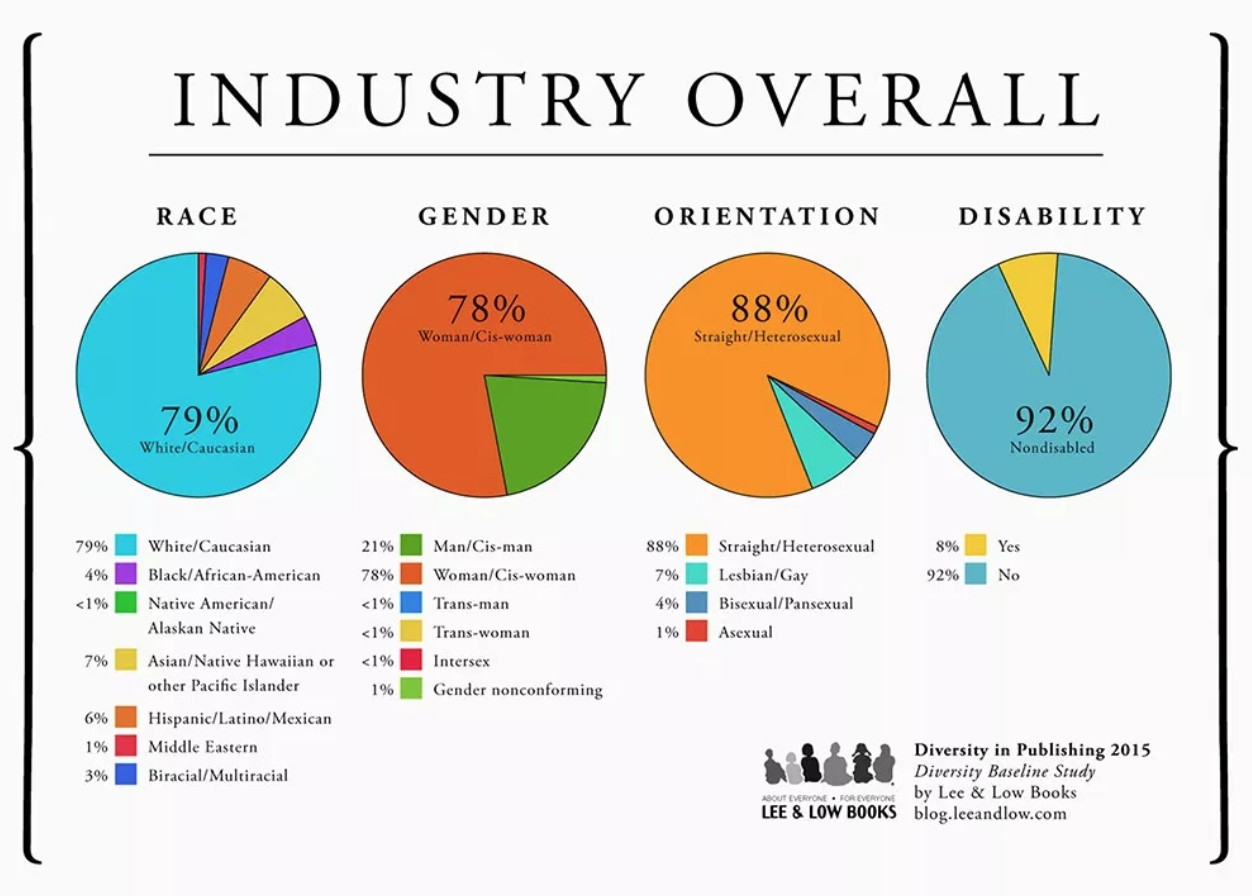
    “If we look at the 2015 Lee and Low Diversity in Publishing data we can begin to see why,” Chadwick shared. The data shows that as of 2015, 79% of the publishing industry is white/caucasian, 78% are women/cis women, 88% are straight/heterosexual, and 92% are non-disabled. From this picture we begin to understand the imbalance in representation in the industry as a whole.

    Breaking It Down

    In order to take a deep dive into this issue, we need to recognize that it is multi-dimensional. Some of the key issues that have been prevalent over the years are that:

      1. Because the publishing industry itself is largely comprised of white, hetrosexual, non-disabled women.
      2. This leads to people of color, LGBTQ+ and disabled authors not getting the kind of equality of opportunities that their valuable work deserves.
      3. It also leads to another highly sensitive issue that is less often discussed but also highly prevalent. When people of color do get publishing deals, their voices are often edited to sound more white.

    We’re going to break down each of these issues in this article and then suggest what needs to happen in the publishing industry as a whole for these statistics to change.


    1 – Changing the Face of the Industry

    “Undertaking a masters in publishing, I quickly began to realize that people of color (POC) were not feeling welcomed in the publishing industry,” Chadwick shared. “When there are such a small number of POC in any industry, it can lead to familiar feelings of isolation or not feeling welcomed. So the problem continues to perpetuate.”

    “The other issue,” she continued, “is that with diversity being highlighted as a buzzword, often companies will carry out a ‘token hire’. Yet we need to ensure that diversity isn’t just a trend that it is being satisfied by ticking a box to say that it is done. We need publishing companies to be addressing the intrinsic biases they have been built upon, so that diversity becomes the norm rather than the following of a trend.”

    She finished by highlighting, “Often POC, and other minority groups, don’t even realize that publishing is a possible career choice. They need to be given the opportunity to explore and pursue such interests, and the publishing industry itself needs to take responsibility for ensuring that this happens.”

    When we have more diversity in the industry itself, it leads to more diverse opportunities for authors of color, authors with disabilities, and LGBTQ+ authors to be considered for publishing deals.

    2 – Creating More Diverse Publishing Opportunities

    A couple of weeks ago a good friend of mine came to me with an issue that sounded all too familiar. He works at a tech conference company, one that has prided itself on celebrating diversity in the industry and has a high volume of POC among both its staff and presenters. He was working with a colleague on picking out female speakers that were “breaking the glass ceiling” in tech. His colleague was picking the list and his job was to refine it. But when the list came through, he was shocked to find that his colleague (who was a white, blond haired American) had picked a list of women that looked exactly like her. As he is brown, he was quick to see the blindspot. “I doubt that she realizes, but she picked 7 versions of herself,” he told me. He rectified the issue and the speaker list became way more diverse. But this is precisely the problem that we have faced in the publishing industry so far. If the majority of the people who are selecting manuscripts for publishing are white, able bodied and heterosexual, there is likely to be an unconscious bias towards selecting authors who feel or sound familiar.

    This leads to our next issue. How voices of color are interpreted through a white lens.

    3 – Honoring Voices of Color

    When Candice got her publishing deal it was a day of celebration. She’d had all the pieces in place—an extremely well written and researched book, a large platform of engaged followers, and even a possible TV show on the table. We’d worked hard to get her a deal and were both super happy when it came through. But just over six months later when her book had returned from the editors she called me, sounding defeated.

    “They edited the blackness out of my voice,” she told me. “I sound like Mrs, Hargreaves, my white, third grade English teacher.” And sure enough, when she sent me the edits to review, her book and been sterilized into a white, generic voice.

    So here’s the challenge—and it’s one that every author will face—regardless of their ethnicity. Because of publishing conventions, there will often be a kind of battle between the author and the publishers, especially if the author writes with a more informal tone. I’ve worked with many authors to bridge this gap and formalize their writing so that it fits with more traditional publishing conventions. But—and this is a very big BUT—this is a totally separate issue from a white editor steaming through a manuscript written by a person of color and “Anglifying” it, so it’s content is more familiar to a white eye.


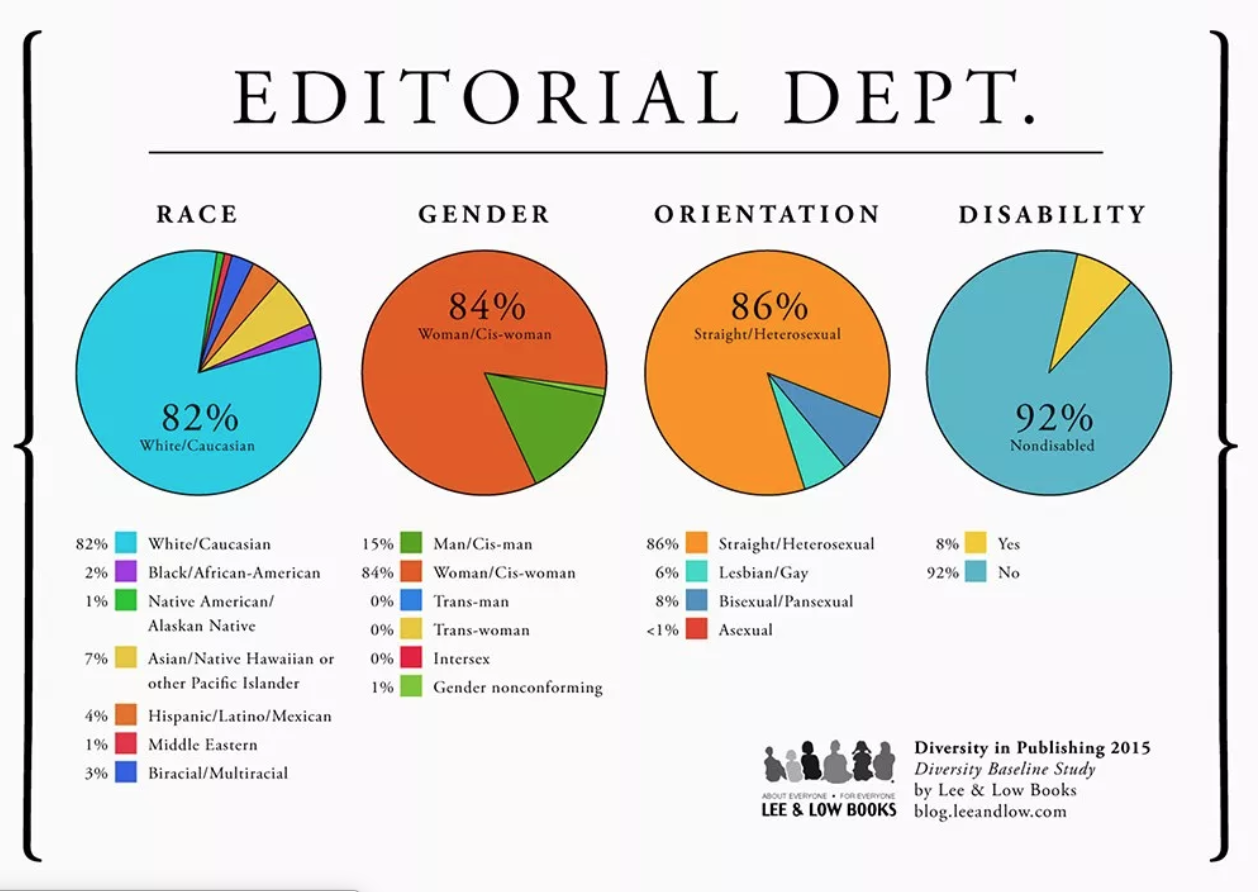
    Highlighting this issue with Chadwick, it’s easy to see the root of this problem. “If we go back to the 2015 Lee and Low Diversity in Publishing Survey, we can see that in the editorial department, 82% of editors are white, 84% percent women/cis-women, 86% straight/heterosexual, 92% non-disabled.” So basically, it’s not just in those who are choosing the publishing deals that create the issue, but when those deals are underway, they are still being edited through a white lens.

    Want regular blogs & updates? Click here to sign up

    Paving the Way Forward

    Some publishing houses have been leading the way on addressing these issues. Houses such as The New Press are at the forefront of these changes. In an article in Publishers Weekly we learn that:


    “The New Press was […] founded with a mandate to embrace diversity both in its publishing lists and in its staff. In an industry with a continuing dearth of minority representation at every level, the New Press strives to practice what it preaches.”

    The New Press began with a staff of five in 1992, and by 2017 had 28 employees, 39% of which were POC.


    “The house’s 25-year-old diversity-focused internship program is one of the industry’s longest running and most successful; it has trained and sent more than 550 former interns into jobs in book and magazine publishing, including in-house.”

    What The New Press have modeled, shows the rest of the publishing industry that change is possible. In order for that to occur, we need to:
      • Make more programs that will open doors and point minorities in the right direction
      • Give opportunities to more diverse voices (creating more positions within the industry, as well as publishing opportunities)
      • Ensure that voices of color are edited with respect for cultural differences
      • Gear departments towards making publishing houses more diverse, and ensure that there are strategies in place to retain those employees
      • Implement diversity training by POC in the publishing industry, so diversity becomes a norm and not just a trend.

    Books are one of our most valuable commodities for our social evolution. Ensuring that books reflect the many dimensions and faces of our society is an essential component for our social development in the 21st century. 


    (SCROLL DOWN TO THE BOTTOM OF THE PAGE FOR FURTHER RESEARCH AND STUDY.)


    This Article was Written and Compiled by Sasha Allenby @Equality Hive

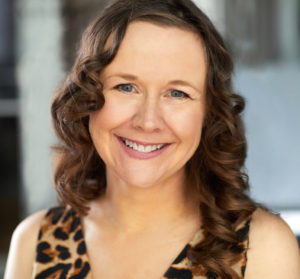
    For the past decade, Sasha Allenby has been a ghostwriter for some of the greatest thought-leaders of our time. Her journey started when she co-authored a bestselling book that was published in 15 languages worldwide by industry giants, Hay House. Since then, Sasha has written over 30 books for global change agents. Following the events of the last couple of years, she turned her skill set to crafting social messages. Her latest book Catalyst: Speaking, writing and leading for social evolution supports thought leaders to craft dynamic messages that contribute to change. 

    This Article was Researched and Contributed to by Sacha Chadwick

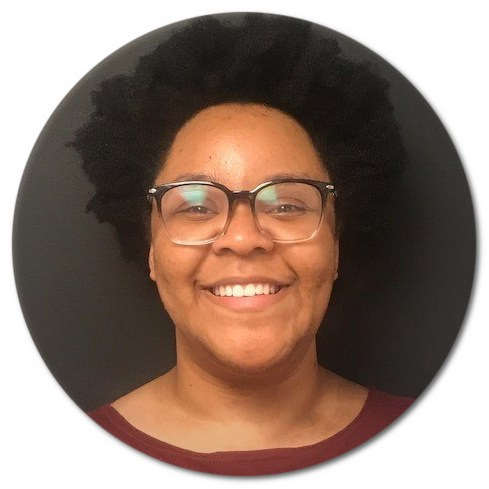
    Sacha Chadwick is a first year graduate student studying Publishing at George Washington University. When she is not studying for school, she focuses her time educating others on the issues and challenges that WOC and minorities face in today’s society.


    Sacha is also an avid reader, and her goal is to contribute to a society where authors from all backgrounds can have their voices be heard.

    You are a catalyst or visionary who is crafting an evolutionary message. You want to be part of a community that supports you to make a difference with your spoken and written word. Sign up to receive weekly blogs and updates that enable you to craft your unique message.


      [recaptcha]

      Further Research 

      This is the Most Recent Lee and Low Baseline Survey Results

      https://blog.leeandlow.com/2016/01/26/where-is-the-diversity-in-publishing-the-2015-diversity-baseline-survey-results/

      Some Organizations to Consider

      https://diversebooks.org/

      https://pocinpublishing.com/

      https://www.chroniclebooks.com/blog/2018/03/22/9-publishing-organizations-promote-diversity-within-industry/

      Excellent Article by Mira Jacobs

      I Gave A Speech About Race To The Publishing Industry And No One Heard Me https://www.buzzfeed.com/mirajacob/you-will-ignore-us-at-your-own-peril

      Other Interesting Articles to Consider

      https://www.publishersweekly.com/pw/by-topic/industry-news/publisher-news/article/73117-at-25-the-new-press-thrives-in-politically-charged-climate.html

      https://www.publishersweekly.com/pw/by-topic/childrens/childrens-industry-news/article/75606-people-of-color-in-publishing-striving-for-more-industry-diversity.html

      https://www.publishersweekly.com/pw/by-topic/industry-news/publisher-news/article/69645-houses-with-no-doors.html

      https://www.publishersweekly.com/pw/by-topic/industry-news/publisher-news/article/69653-why-publishing-is-so-white.html


      https://broadly.vice.com/en_us/article/9aex3p/read-between-the-racism-the-serious-lack-of-diversity-in-book-publishing

      April 10, 2019

      What A Lion and a Wizard Taught Me About Social Impact Writing

      What A Lion and a Wizard Taught Me About Social Impact Writing

      Read Time – 4 minutes.

      When writing for social impact, you likely have a mission in mind. You want to influence others, or create a positive wave in the world with the way you shape your words on the page.

      One of the key aspects of creating an effective message is intentionality. In previous posts—and in my book, Catalyst—I’ve highlighted how it’s crucial to shape your message around your audience. You need to know who they are, how they think, and what their needs are before you can shape your words to impact them in a positive way.

      For most influencers though—particularly in these current times—there is another factor to consider. Even if you craft a message with your best intentions, carefully consider your audience, and skillfully shape your message, it isn’t always going to land as you anticipated. If your message makes an impact, there is often a tidal wave of responses that you couldn’t have even predicted. This often creates a fear for many emerging social impact leaders, activists and thought-leaders. If you are like many of the clients I’ve worked with, you have probably found yourself holding back because you don’t want to rock the boat. One of my favorite quotes on this topic came from Dr. Melva Green when I interviewed her several years ago. She told me:

      ‘I do not believe that we have the right to hide our light. If we have been put on this planet at this point in time for humanity’s evolution, and we have something to share that can shift that consciousness, it is our responsibility. We have taken sacred contracts and sacred oaths to rock the boat.’

      If you are just starting out with your message creation, and you’ve been afraid of rocking the boat, I want to share two stories from about a decade ago when I was at the beginning of my career as an author. I’m going to share how a lion and a wizard taught me that we can never really predict how something is going to affect others. Both of these events occurred around about the time that my second book had just been released—a co-authored bestseller that was released in over 15 languages globally. The book took me from being relatively unknown to suddenly having an engaged email list of tens of thousands. And two people from that list taught me a vital lesson that I continue to share with my clients and workshop participants today.

      The Lion

      The first time I met her, ‘Sally’ and I were both in a difficult place. We’d bonded because we’d been chronically ill for several years, and we were attending an emotional health seminar that was to change the course of my life. The seminar was hosted by Karl Dawson and at the point I did not know that he would not only be the one that helped me heal from chronic disease, but also that we would co-author a bestselling book together. Sally was there too, and I remember her as someone that seemed very stuck. You could tell that she desperately wanted to change but there were a lot of internal blockers for her to overcome before she could move forward. She had that intense look in her eyes of someone who really wants to break out of their own prison, but doesn’t know where to start.

      The second time I met her was several years later, and this time, Sally had dramatically transformed. She greeted me with a huge hug and a smile, and now, her eyes were filled with light. They began to fill with tears as she told me about her transformation.

      “It started with your newsletter,” she said. And it turned out that what had helped her wake up from her own prison had nothing to do with me. And everything to do with a lion!

      Because I was working in the field of emotional health and trauma, at one point I’d decided to end my newsletter with a short video that inspired hope and joy. One week I’d shared the video of Christian the Lion. As the video went viral, you may already know the story. Two young men in England had adopted a lion back in the 1970s (before it was illegal). They’d tried to raise it in their apartment in London, but when it got too big, they’d taken it to a wildlife park in Africa. The video was of the incredibly touching moment where the two young men had been reunited with the lion years later at the wildlife park, and the unconditional love between them all.

      In that moment, when Sally saw the love that passed between the three of them, something inside her cracked open, and she experienced unconditional love for the very first time.

      (The reunion is from minute 1 onwards if you just want to skip right to the heart of it.)

      The point is, I had no way of knowing the impact that video would have on Sally, or anyone else. And this is the first important lesson for us to take away as activists or social impact influencers. We cannot truly know what positive impact a message we share will have on others. We can only share everything with a positive intention and trust it will land as it needs to. We have no real control over how it lands.


      We cannot truly know that positive impact that a message we share will have on others.

      Want regular blogs & updates? Click here to sign up

      The Wizard

      The second lesson came at about the same time and was a seemingly light hearted comment that I shared with my mailing list. This time, however, that comment managed to offend.

      It was around the time the Harry Potter films were popular. In that time, I was teaching and working with a technique that seemed fairly magical. It was a powerful protocol that gave exceptionally powerful relief from emotional trauma. It was the technique that had helped me heal from chronic illness, and was also the subject of my bestselling book. Somewhere in the newsletter I’d made a Harry Potter reference to “wizards and muggles” (if you don’t know Harry Potter, “muggles” are the non-magical folks). It was intended as a light-hearted nod to popular culture. But one reader had taken great offense. He’d believed my lighthearted message to mean that I somehow thought I was superior, and a slew of bitter emails followed.

      The lesson that came out of this exchange was that just in the same way that you can’t tell what will influence, you also can’t predict what is going to push someone else’s buttons.

      You can’t always predict what is going to offend others.

      These two incidents helped me to understand some of the most important elements of writing for social impact; lessons that still stay with me today. If you really don’t know how something is going to have a positive impact or push a button in someone, then you can really only do one thing. Well, a series of things, I would say.

      These can be summarized into the following:
      1. Come from a place of immaculate intention:You know you want to create good in the world, or influence others towards more equality, peace, community and connection. You keep your good intention at the center of everything.
      2. Craft a message with your intention in mind: You keep in mind who your audience is, where they are in their lives, and the ways in which you want to influence them.
      3. Share your message with the world: With your intention and your audience in mind.
      4. Navigate the outcome: You don’t get too caught up in the praise, or derailed by the criticism. You don’t attach to the outcome. You just show up and do your thing.

      If you can master these four elements, you are well on your way to sharing a message of influence in the world and being an effective social impact leader.


      For the past decade, Sasha Allenby has been a ghostwriter for some of the greatest thought-leaders of our time. Her journey started when she co-authored a bestselling book that was published in 12 languages worldwide by industry giants, Hay House. Since then, Sasha has written over 30 books for global change agents. Following the events of the last couple of years, she turned her skill set to crafting social messages. Her latest book Catalyst: Speaking, writing and leading for social evolution supports thought leaders to craft dynamic messages that contribute to change. 


      You are a catalyst or visionary who is crafting an evolutionary message. You want to be part of a community that supports you to make a difference with your spoken and written word. Sign up to receive weekly blogs and updates that enable you to craft your unique message.

        [recaptcha]

        March 27, 2019

        Challenging Consensus Reality

        MELANIE DEWBERRY INTERVIEW


         THIS INTERVIEW IS FOR:

        Speakers

        Writers

        Leaders

        Emerging or growing speakers, writers, and leaders in the social evolutionary field.


        ABOUT THIS INTERVIEW

        If you are an emerging or growing catalyst, visionary or thought-leader in the field of social evolution, there is one question you have likely asked yourself. “How do I create meaningful change within the current mindset of society?”

        If you have asked yourself this (or a similar question), then this interview with Melanie DewBerry will give you some groundbreaking thinking points for your own journey. Melanie shares a unique and in depth perspective on how to disrupt consensus reality and challenge the system from within. 


        About Melanie DewBerry

        Melanie DewBerry  combines her Native American background with decades of personal practice. As a coach and mentor, she shares her down-to-earth, practical spiritual teachings, challenging her clients to dig deep and live truthfully. Her work is filled with love and authenticity and she is committed to supporting everyone her work touches to transform and evolve. She is author of The Power of Naming: A Journey toward Your Soul’s Indigenous Nature, which was released by Hay House in 2017.

        Connection and Resources:

        Visit Melanie’s website at melaniedewberry.com

        Buy The Power of Naming on Amazon.com


        Read our previous blog post on her interview about breaking down consensus reality. 


        About Sasha Allenby

        For the past decade, your presenter—Sasha Allenby—has been a ghostwriter for some of the greatest thought-leaders of our time. She co-authored a bestselling book that was published in 14 languages worldwide by industry giants, Hay House. Since then, she has ghostwritten over 30 books and her skills are sought after globally. Her new book, Catalyst: Speaking, Writing and Leading for Social Evolution was a global #1 Bestseller in Social Sciences in Jan 2019. 


        You are a catalyst or visionary who is crafting an evolutionary message. You want to be part of a community that supports you to make a difference with your spoken and written word. Sign up to receive weekly blogs and updates that enable you to craft your unique message.


          [recaptcha]


          February 20, 2019

          Reducing Economic Inequality Through Intersectionality – PART ONE

          Reducing Economic Inequality Through Intersectionality – PART ONE

          Read Time: 8 mins. 

          Economic disparity is the linchpin that sits at the center of most issues of inequality. As intersectionality has become an increasingly utilized buzzword, our quest to find the places where each issue of inequality meets has become a hot topic. When it comes to economic disparity, it seems to sit at the center of almost every issue. We can’t talk about racial equality, prison reform, equal pay rights for women, immigration, or refugee equality, for example, without touching on the issue of socio-economic gaps.

          Most of us who are at the leadership level of creating more equality are able to talk with perhaps a little confidence about what the issues are. We may be able to state that the top 1% are part of the greatest challenge or that we need to close socio-economic gaps in order to create more equality for all. However, when it comes to the specifics of the underlying issues, many of the social impact leaders and social entrepreneurs that I work with aren’t able to properly articulate the finer details of the argument or pinpoint the exact issues that need to change.

          With this in mind, I interviewed Tech Entrepreneur, Economist, and Social Activist, Mammad Mahmoodi. I wanted to understand how the clients I work with could better articulate their arguments around closing socio-economic gaps more effectively. What I thought would be a 30 minute conversation turned into a three day interview, and forms the basis of an article that will span three blog posts and look at the issue from a variety of angles.

          Mahmoodi and Allenby finalizing the article series.

          Mahmoodi and Allenby finalizing the article series.


          We’ll start this week by looking at the “what” that underpins the current socio-economic gaps. In Part Two we’ll be diving deeper on the issue of economics and intersectionality, and in Part Three we’ll be sharing some models that offer solutions from various economists throughout the world. We’ll also be suggesting a paradigm shift in how economic policies are decided, in order to create more equality for all.

          In whatever area you are creating more equality, this article series will offer you a new vocabulary for articulating your arguments for socio-economic change.


          Massive Socio-Economic Disparity is Actually a NEW Problem

          When I picture times of old, at least in the UK where I grew up, I always imagine that the socio-economic gaps were much greater than they are now. I picture the streets of London hundreds of years ago, with the privileged riding around in gold carriages and the less fortunate scrabbling for food in the dirt. So one of the first facts that Mahmoodi shared—that massive socio-economic gaps is actually a relatively new issue—blew my mind.

          Gaps on a Global Level

          Inequality on a global level is a new issue that has become more prevalent in the last 200 years. In economics, the term “GDP per capita” which means taking the total money that a country makes and then dividing it into how many people live there. Using the GDP per capita to measure, in 1820, the richest nation in the world (at that time, the United Kingdom) was making only four times more than the poorest nation in the world which was Africa.1 (It referred to Africa as a nation as, in 1820, Africa was not defined by independent and separate countries at that time, but rather colonies of super powers. Hence, the study referred to Africa as one nation.)

          In 1998, the richest economy in the world (by then, the United States) had a GDP per capita twenty times the poorest nation (which was still Africa).2

          Using the stats from the World Bank, Mahmoodi shared that within the last 20 years, (1998 to the end of 2017), this ratio had increased to 38 times. “This shows that the global inequality rate is increasing at an unprecedented rate,” he shared.

          As of 2018, the eight richest people in the world have the equivalent wealth of the bottom 50% of the world (which means that eight people have the wealth of 3.6 billion people).3

          Gaps in the US

          On a national level, while the average income for the bottom 60%t of society has decreased in the last ten years, according to Census Data, the income of the top ten percent has increased significantly. Moreover, between 1980 to 2009, the share of income for the top ten percent increased from 33% to nearly 50% of all income.4

          Unbelievably, the US is among the countries with the largest disparity between rich and poor among all the developed countries (the only developed countries with larger disparity are Chile, Uruguay and Singapore).5


          Inequality is Not Just a Humanitarian Issue

          In order to better understand wealth generation and redistribution, we first need to grasp the changing face of attitudes in economics as a whole.

          From an economic perspective, inequality used to be seen as a humanitarian and philanthropic issue. In fact, in the old paradigm of economics, it used to be believed that addressing inequality would reduce economic growth, but now there is a new paradigm of economics—as well as a large amount of accompanying statistics (which we’ll be sharing across the article series)—that argue the opposite.

          The old paradigm said that the money that circulates in an economy can be shown as a pie, and what society should focus on is expanding the size of the pie rather than focusing on the size of the piece that each person gets. The argument was that if the whole pie size increases, the size of the slices that each person gets increase automatically too. It was also believed that focusing on the size of the pie slices detracts us from working from increasing the size of the pie as a whole.

          The new paradigm believes that working on increasing the size of the whole pie and working on fairness of the slices of the pie are not contradictory to one another. The new paradigm even goes further to claim that if the slices of pie are too unevenly distributed, it prevents the whole pie from increasing in size. So the new paradigm in economics is leaning towards more fairness for all.

          According to Stiglitz—Nobel Economic prize winner, and one of the most prominent economists in the world—in a society with heavy economic inequality, not all the money circulates. This is because the wealthy don’t spend their money as much as the less affluent (due to those with less money needing to spend their income in order to live). So when money is circulating, it brings more economic growth to a society.

          Therefore, tackling inequality is both the responsibility of humanity and also makes sense economically, too.


          Two Types of Money – Resulting in Different Types of Economic Inequality

          In order to create more socio-economic equality, we need to better understand how inequality is created. To do so, We need to understand the difference between INCOME inequality and WEALTH inequality. Income is the money that we receive from creating products or performing services. Wealth is the value of everything that you own, which includes your income, land/house/apartment that you own, money you inherit, and royalties you receive.

          Income inequality is the gap between what the lowest income and the highest income people earn. As we saw from the statistics above, there is no doubt that this gap has increased in the US. However, wealth inequality is actually the main reason for socio-economic disparity. Wealth inequality mainly comes from the accumulation of fixed objects. To explain further, money can result in two things:

          1. PRODUCED OBJECTS – this is material goods, but also anything else that causes the rotation of money – food in restaurants, experiences, vacations, clothes, or groceries we buy, etc.
          2. FIXED OBJECTS – owning land, apartments, Intellectual property rights, valuable art, and so on. These don’t rotate the economy or increase its productivity. Fixed objects get their value from their limited presence, which is why they constantly increase in value. For example, apartments available for sale in cities like San Francisco and New York increase slower than the population, so demand increases and they become more expensive, leading to an increase in wealth for their owners.

          “What happens is that the new money is not circulating as much in produced objects as it has been in accumulating fixed objects,” Mahmoodi shared. This increases the wealth of those who own fixed objects and reduces the money that could have been circulating in produced objects. When money is spent on the produced objects, it helps grow the economy and—more importantly—distribute the growth gains. This means that wealth inequality actually stems more from the accumulation of fixed objects, plus the rent and royalties coming from it, than from anything else.

          Also, as the fixed object valuation escalates, it increases the risk of bursting the economy bubble. This is similar to what happened in 2008, which—as you will see below—causes more inequality.

          SIGN UP TO RECEIVE PARTS 2 + 3 OF THIS SERIES

          Financial Crisis and How it Increased Socio-Economic Inequality

          Most of us are aware of the financial crisis of 2008, but what you may not be aware of is how this contributed to socio-economic gaps.

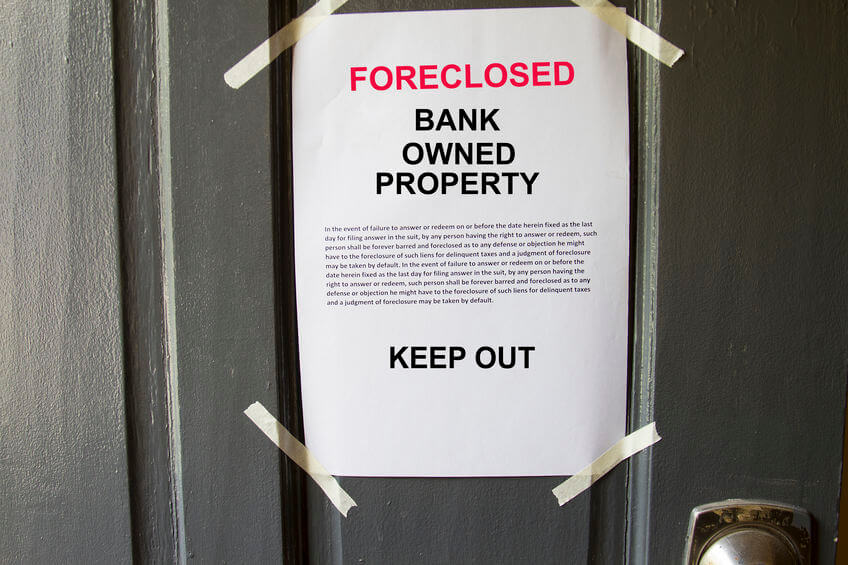
          At the start of the 21st century, fixed object prices had a bubble, which burst in 2008. Basically, banks had valued houses more than what they were worth so when that bubble burst, the banks had a multitude of loans that people couldn’t pay back.

          For the years before the bubble burst, money was increasing and—according to Stiglitz (the Nobel Economics prize winner and prominent economist that we introduced earlier)—over 95% of that went to the top one percent.6 The wealthy received the fixed money, and that wealth didn’t translate to income for the mass population. When the bubble burst, there were over 1500 billion dollars lost in the US economy. So what did the US government do? They gave a 700 billion dollar bailout to the banks that came out of taxpayers’ pockets that financed and insured the loss of the top 1%. Meanwhile, African-American families saw their wealth reduced by 53% in the recession (between 2005 and 2009). This led Stiglitz to call this phenomenon “phony capitalism,”7 a phrase pointing to the fact that profit was privatized and loss was socialized.

          Further Causes of Economic Inequality

          Of course, these aren’t the only issues of economic inequality. As we have already highlighted, a deeper look is needed into the unfair tax system, tax loopholes, offshore tax evasion, as well as bankruptcy/inheritance/intellectual property laws, and also deregulation policies (all of which we are going to explore in depth in part three of this series).

          In Part Two of this article, we’ll be taking a careful look into how socio-economic gaps show up in a variety of issues, from prison reform, to racism, to child poverty, to the justice system, and how we can address them with intersectionality.


          ABOUT THE AUTHORS


          Mammad Mahmoodi is an economist, community builder and tech entrepreneur. He has a passion for the social impact of technology, and how inequality impacts innovation and economic growth. He was co-founder of Ondamove (one of pioneering geo-tagging companies). Following that, he was a starter—and Executive Director—of Open Data Science Inc. (one of largest Artificial Intelligence communities in the world). He has taught entrepreneurship in a number of universities around the globe. Currently his main focus is supporting enterprises to create economic equality.

          For the past decade, Sasha Allenby has been a ghostwriter for some of the greatest thought-leaders of our time. Her journey started when she co-authored a bestselling book that was published in 12 languages worldwide by industry giants, Hay House. Since then, Sasha has written over 30 books for global change agents. Following the events of the last couple of years, she turned her skill set to crafting social messages. Her latest book Catalyst: Speaking, writing and leading for social evolution was a global number one bestseller in social sciences on its release in Jan 2019. It supports thought leaders to craft dynamic messages that contribute to change. 


          Receive PART TWO and PART THREE of this series, plus regular blogs and updates. Be part of a community that is advocating for social change and learn to craft your messaging more effectively.


            [recaptcha]


            SOURCES:

            1 Sachs, Jeffrey, The End of Poverty, Penguin Books, New York, 2015, P. 28.

            2 As above.

            3 https://www.theguardian.com/global-development/2017/jan/16/worlds-eight-richest-people-have-same-wealth-as-poorest-50

            4 http://piketty.pse.ens.fr/files/capital21c/en/Piketty2014FiguresTables.pdf

            5 http://datatopics.worldbank.org/gmr/palma-index.html

            6 Stiglitz, Joseph E., Great Divide: Unequal Societies and What We Can Do About Them, W. W. Norton & Company Ltd., New York, 2013,  P.120

            7 Harper’s Magazine, Stiglitz, Sep 2014

            1234
            Recent Posts
            • Writing a book? Make sure you set the tone right for your reader. PART THREE
            • Writing a book? Make sure you set the tone right for your reader. PART TWO
            • Writing a book? Make sure you set the tone right for your reader. PART ONE
            • Can Every Act of Business be an Act of Love . . . and Still be Effective?
            • Are You Ready to Write a Book? Checklist for Social Entrepreneurs
            Archives
            • July 2019
            • June 2019
            • May 2019
            • April 2019
            • March 2019
            • February 2019
            • January 2019
            • November 2018
            • September 2018
            • July 2018