
Equality HiveEquality HiveEquality HiveEquality Hive
  • Home
  • Ghostwriting
  • BLOG
  • Book
  • About
  • Contact
  • Home
  • Ghostwriting
  • BLOG
  • Book
  • About
  • Contact
June 20, 2019

Writing a book? Make sure you set the tone right for your reader. PART ONE

Read time – 5 mins.

Have you ever had someone react negatively to a text or email you sent and wondered what went wrong? Nine times out of ten it was because of how difficult it can be to convey tone in the written form. Maybe there was a time when you found yourself confused about why you ended up in an argument based on something that you said? Again, it’s likely that your tone was the problem, and not the content of what you shared.

In communication, we often put far too much emphasis on what we are saying when, in fact, tone can be everything. Mastering tone is the key to artful communication in both the spoken and written word. However, it’s especially vital in the written word when your reader can’t hear the subtle nuances behind what you are saying.


If you are writing a book, setting the right tone for your reader is crucial. There are so many different elements to consider that we’ve divided this article series into several parts so you can get some clarity around the essentials of tone, and apply it to writing a book (or other forms of written communication).

SIGN UP FOR OUR FREE MASTERCLASS ON SOCIAL IMPACT MESSAGING
Click here to learn more and register

Difference Between Tone in the Spoken and Written Word

There are two types of tone, and we want to distinguish between them here.
1.  The tone of voice that you use to convey a spoken message

This includes the pace of how you speak (fast or slow), the volume (loud or soft), the energy behind your words (flat or passionate), etc. It also includes the different words that you decide to emphasize.

2. The mood you create with your spoken or written word

This includes your choice of words and how you arrange them to create a mood or atmosphere. It’s a combination of the types of words you choose—whether they are words that instill hope or fear, for example—and the context within which you present them.

When you are writing a book, your tone can set your reader’s heart’s on fire. It can also shut them down. A successful author has to become masterful in creating mood and climate on the page. Just as a director of a movie is not only thinking of the words that the actors are saying, but also how the set, lighting, and music add to the ambiance of a film, so do you, too, need to consider the mood you are creating when you write.

Perhaps one of the most vital understandings about tone is that our spoken and written word conveys a different feeling. An example of this can be seen in the work of spiritual teacher Anthony de Mello. His book Awareness was crafted from an eight-hour workshop that he gave. The workshop was hysterically funny, but his light, humorous and heartfelt tone did not translate to the page and, although brilliant, the book reads more like a dry, spiritual scripture with no humor whatsoever. Perhaps you have experienced something similar if you created an audio recording that you tried to transcribe.


You can still use your transcribed spoken material for the content of your book, and many great leaders record their lectures, talks or workshops and craft them into writing, but if you are doing this, you need to ensure that what you have said translates well into the written form.

New Program for Authors Starts July 16th 2016
click here to learn more and register

Defining Your Audience Helps Set Your Tone

Most people imagine that writing a book starts with developing concepts or telling great stories. While these are essential elements of book writing, there’s a crucial step before you start. You need to figure out who the book is for, what their needs are, and why your book is going to meet those needs. One of the most common mistakes that a potential author makes is that, if asked the question, “Who is this book for,” they answer, “Everyone, from 18 to 80.” If your main audience are millennials, for example, then that’s going to require a totally different tone than if you are speaking to spiritual entrepreneurs or academics. So part of tone mastery is adjusting your tone to the needs of the reader you are reaching. Really considering the communication that is required in order to create a connection.


Finding Your Voice as a Writer

There is often a force behind how we speak and write that is so imperceptible that it can be difficult to pinpoint. Many factors contribute—where you are on your own life journey, how congruent you are with the words you are sharing, how authentically you are living what you are teaching, as well as how much personal power you feel you have in your self-esteem, confidence, and courage to bring your statement forward.

If there are any parts of you that are conflicted about what you are sharing, then the tone of your writing can feel off. If your words ring true to the core of your being and you can share them with tenacity and confidence, they will likely have a completely different impact on your audience.


The mood you are in will also affect your tone. Many great authors have experienced writing a section for their book while they were in a certain mood. It might feel good to write it at the time, but when they read it back it sounds off or unaligned with their message or the needs of their audience. So it’s crucial to read back what you have written when you are in a different mood, and be prepared to let it go if it doesn’t align with the overall mission of the book.

Engaging Emotions

Part of tone mastery is your ability to engage emotions. If you are writing a nonfiction book that is designed to inspire change in others, then one of your core focuses is engaging the emotions of your reader. If you write a book that does not touch upon the emotional experience of your reader, however unique your concepts are, it will fall short of igniting a fire within them.

You need to inspire your audience beyond their apathy, fear, or inaction. You can start a fire in their hearts that makes them feel “Yes, this is possible. We can do this together. I can play a meaningful role in the times to come.” Part of your ability to ignite your audience will depend on your ability to engage their higher emotions, such as:

  •     Hope
  •     Inspiration
  •     Compassion
  •     Joy
  •     Peace
  •     Love
  •     Faith
  •     Passion

To be a catalyst for these qualities, you need to be in touch with them in yourself. To convey a vision of hope / faith in a future of greater equality / passion for your cause / inspiration to others to step up and take action, etc., it’s essential to mirror these qualities in your own inner experience so that they are authentically expressed in the tone of your written word.

In igniting these qualities you want to make sure you don’t ignore or gloss over the more difficult emotions your audience is experiencing. If you want to foster inspiration, hope, and faith, you would also want to touch upon:

  • any anger at the injustice your reader may be facing
  • any exhaustion, especially if they have been dealing with the same issues for a long time
  • any fear and disappointment that they may have encountered.
And so on.

You would balance out the vision of what is possible with the reality of the moment. Acknowledging and engaging with the full range of emotions in yourself is part of this. If you only communicate from the higher emotions and don’t acknowledge the weight of the issues that your audience carries in their hearts, your tone may appear too flighty and disconnected from the very challenges you are attempting to address and transform.

SUMMARY

In part one of this article we’ve looked at the difference between your tone in the spoken and written word, setting the right tone for your audience, how your personal tone affects your writing, and engaging different emotions. In the second part of this article series we’ll look at how to use tone effectively to challenge your reader, some of the common pitfalls with tone, and whether to use a formal or informal tone for writing a book.


NEW PROGRAM FOR AUTHORS STARTS JULY 16th 2019
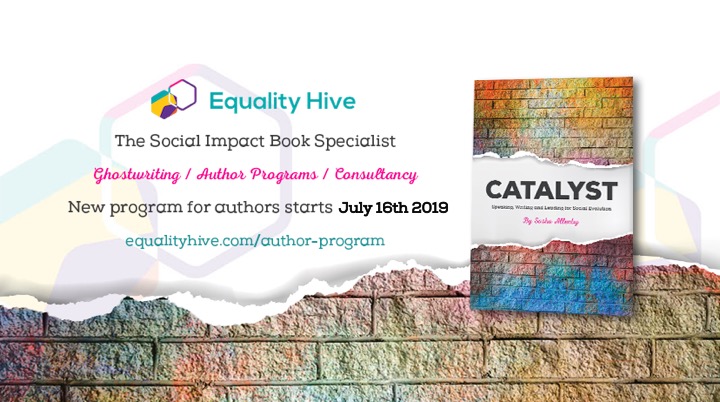
For the past decade, Sasha Allenby has been a ghostwriter for some of the greatest thought-leaders of our time. Her journey started when she co-authored a bestselling book that was published in 15 languages worldwide by industry giants, Hay House. Since then, Sasha has written over 30 books for global change agents. Following the events of the last couple of years, she turned her skill set to crafting social messages. Her latest book Catalyst: Speaking, writing and leading for social evolution supports thought-leaders to craft dynamic messages that contribute to change. 


You are a catalyst or visionary who is crafting an evolutionary message. You want to be part of a community that supports you to make a difference with your spoken and written word. Sign up to receive weekly blogs and updates that enable you to craft your unique message.


    [recaptcha]


    June 13, 2019

    Can Every Act of Business be an Act of Love . . . and Still be Effective?

    MARK SILVER INTERVIEW

    QUICK LINK TO:

     THIS INTERVIEW IS FOR:

    Speakers

    Writers

    Leaders

    Who are developing social impact, social entrepreneurial or other heart-based businesses, and want to know how to market themselves authentically.


    ABOUT THIS INTERVIEW

    WHAT IF EVERY ACT OF BUSINESS COULD BE AN ACT OF LOVE . . . AND STILL BE EFFECTIVE?

    This is the question we addressed in a recent interview with Mark Silver from Heart of Business, Inc.
    If you are either just starting out, or developing a business, and are having challenges with how to get your message out there in a way that is authentic and heart-based, then this interview is going to provide you with so much value.
    We talked about the difference between some of the more traditional forms of marketing, versus how to market from the heart, and addressed some of the more sensitive issues of marketing a social impact or social entrepreneurial business.

     
    About Mark Silver, M.Div.

    Mark Silver is the founder of Heart of Business, Inc. Since 2001 he’s been a pioneer in integrating spirituality and business, in a way that is effective and nourishing. His team has helped thousands of spiritually-oriented, heart-centered entrepreneurs feel really good while finding plenty of their best clients and making more money.

    He’s found that you really can have both: every act of business can be an act of love, and still be effective.

    Latest Program:

    Doors for the latest program at Heart of Business close on June 24, 2019.


    https://www.heartofbusiness.com/training-programs/heart-business-basics/


    About Sasha Allenby

    For the past decade, your presenter—Sasha Allenby—has been a ghostwriter for some of the greatest thought-leaders of our time. She co-authored a bestselling book that was published in 15 languages worldwide by industry giants, Hay House. Since then, she has ghostwritten over 30 books and her skills are sought after globally. Her new book, Catalyst: Speaking, Writing and Leading for Social Evolution was a global #1 Bestseller in Social Sciences in Jan 2019. 

    New Program for Authors Starts July 16th 2019
    Click here to learn more and register

    You are a catalyst or visionary who is writing a book or crafting a message that creates change in the world. Sign up for weekly updates at Equality Hive so that we can support you to share your message with the greatest effect.


      [recaptcha]


      June 10, 2019

      Are You Ready to Write a Book? Checklist for Social Entrepreneurs

      Read time – 5 mins.

      As an aspiring author you have a vision to create great impact in the world with the power of your written word. There is something inside you telling you that you’re here on this planet at this time because you are supposed to make a huge difference. And you also know that you’re going to have the greatest impact if you share your message in a book.

      Truthfully, we all know that humanity is facing many great challenges on a number of levels at this time. And what we need are leaders, down on the ground, stepping up to answer those challenges with a new perspective and fresh ideas.


      If you are one of the ones that is feeling that calling—whether you want to tackle some of the social issues that are prevalent in our world today, build something great, create more equality and consciousness, or share an idea that could shift humanity in a different direction—if you are ready to step up and play your part and a book feels like the most powerful way to reach the greatest number of people, the following checklist will ensure that you have all the pieces in place before you begin.

      New Program for Authors Starts July 16th 2019
      Click here to learn more and register

      #1 – ARE YOU READY TO LEAD?

      First and foremost, we need to take a look at you as a leader. You may be already out in the world presenting your ideas to an audience or taking your first steps to do so. One of the initial considerations is getting yourself ready to lead. In a fiction book, an author can hide behind the story. You’ll find some of the most reserved and introverted authors who never give interviews about their material, but who have touched their audience through their characters to the point where they can stay hidden behind their creation.


      You won’t have the same luxury with a non-fiction book, particularly if you are writing one that shares a unique point of view. You’ll need to be prepared to stand by your message, and in these current times, that can also mean being prepared to stand by it in the face of those who oppose it or don’t agree with what you have to say. So developing your conviction as a leader is going to be vital. It won’t just affect any talks or interviews you give about the book; it’s also going to affect the tone of the book so that you can stand by what you say with veracity and the reader feels your confidence in what you are proposing.

      #2 – HAVE YOU GOT SOMETHING TO SAY?

      Having ghostwritten over 30 books, as well as having 4 best-selling books of my own (one of which was published in 15 languages), as time went on I began to see a pattern in those that had the most success. Either the author had a unique thing to say or a unique way of saying it. In today’s current market, with so many new authors finding their voice through the written word, you want to ensure that your book falls into one of these two categories, so that your reader sees you as someone who is bringing a fresh perspective and solving some of the challenges that they are facing individually, or we are collectively facing in humanity.

      #3 – IS YOUR IDEA GROUNDED IN REALITY?

      Often a prospective author will reach out to us with an idea for a book but it won’t be grounded in reality. This means that they had an interesting idea about a message they want to share, but it hadn’t been tested on real life human beings, or tried out in the real world.


      If you are just starting out with your idea and you feel like a book is the best medium to share it, you need to be prepared to try it out in the real world to give it some depth as part of the process of writing your book.

      New Program for Authors Starts July 16th 2019
      Click here to learn more and register

      #4 – ARE YOU AWARE OF YOUR AUDIENCE AND THEIR NEEDS?

      On a similar theme, many thought-leaders launch into writing a book without a single thought for who their reader is going to be. There needs to be a connection between what you want to say and what your reader might need to hear, so that you are writing it for them and not just because you’ve got something burning in your heart that you want to share.

      #5 – IS A BOOK THE BEST MEDIUM FOR YOUR MESSAGE?

      Most people dream of seeing their name on the cover of a book. But it’s always crucial to ask if it is the most powerful medium for your message at this time. This includes some tough questions around whether you have the skillset to put it together (or the funds to hire someone else to do it for you if you don’t). But it also includes considerations such as whether you have enough quality content for a book or whether what you have to say could be more effectively distilled in a video, a blog series, or another medium.

      #6 – ARE YOU READY TO MARKET YOUR MESSAGE?

      There was a time in publishing when a quality deal meant that the publisher would take care of many elements of the marketing for you. And while a good publishing deal still might include some input from the publisher in this area, it isn’t guaranteed. In fact these days, particularly if you are sharing a non-fiction message, the publisher is going to be looking at other aspects of how you share that message outside of your book, such as how you show up on social media and what kind of audience you have built. Even if you self-publish your book, you are going to need an audience to share it with (or a number of joint venture partners who are willing to promote the book for you), so if you have zero interest in marketing your message, then putting all your efforts into writing a book will be unlikely to yield the results you are looking for.

      SUMMARY

      So if you are ready to step into a leadership role (or expand the one you are already in), you have something unique to say or a unique way of saying something that’s already been said, you are aware of a need your audience has and you have an idea that could meet that need, you are sure that a book is the best way to reach your audience, and you are ready to get out there and market your message, you have all the basic pieces in place for starting to write a book that could make a significant impact on humanity.


      NEW PROGRAM FOR AUTHORS STARTS JULY 16th 2019

      For the past decade, Sasha Allenby has been a ghostwriter for some of the greatest thought-leaders of our time. Her journey started when she co-authored a bestselling book that was published in 12 languages worldwide by industry giants, Hay House. Since then, Sasha has written over 30 books for global change agents. Following the events of the last couple of years, she turned her skill set to crafting social messages. Her latest book Catalyst: Speaking, writing and leading for social evolution supports thought-leaders to craft dynamic messages that contribute to change. 


      You are a catalyst or visionary who is crafting an evolutionary message. You want to be part of a community that supports you to make a difference with your spoken and written word. Sign up to receive weekly blogs and updates that enable you to craft your unique message.



        [recaptcha]


        Recent Posts
        • Writing a book? Make sure you set the tone right for your reader. PART THREE
        • Writing a book? Make sure you set the tone right for your reader. PART TWO
        • Writing a book? Make sure you set the tone right for your reader. PART ONE
        • Can Every Act of Business be an Act of Love . . . and Still be Effective?
        • Are You Ready to Write a Book? Checklist for Social Entrepreneurs
        Archives
        • July 2019
        • June 2019
        • May 2019
        • April 2019
        • March 2019
        • February 2019
        • January 2019
        • November 2018
        • September 2018
        • July 2018